BioFlow Espresso
BioFlow Espresso
Espresso machine inspired by Luigi Colani
Espresso machine inspired by Luigi Colani
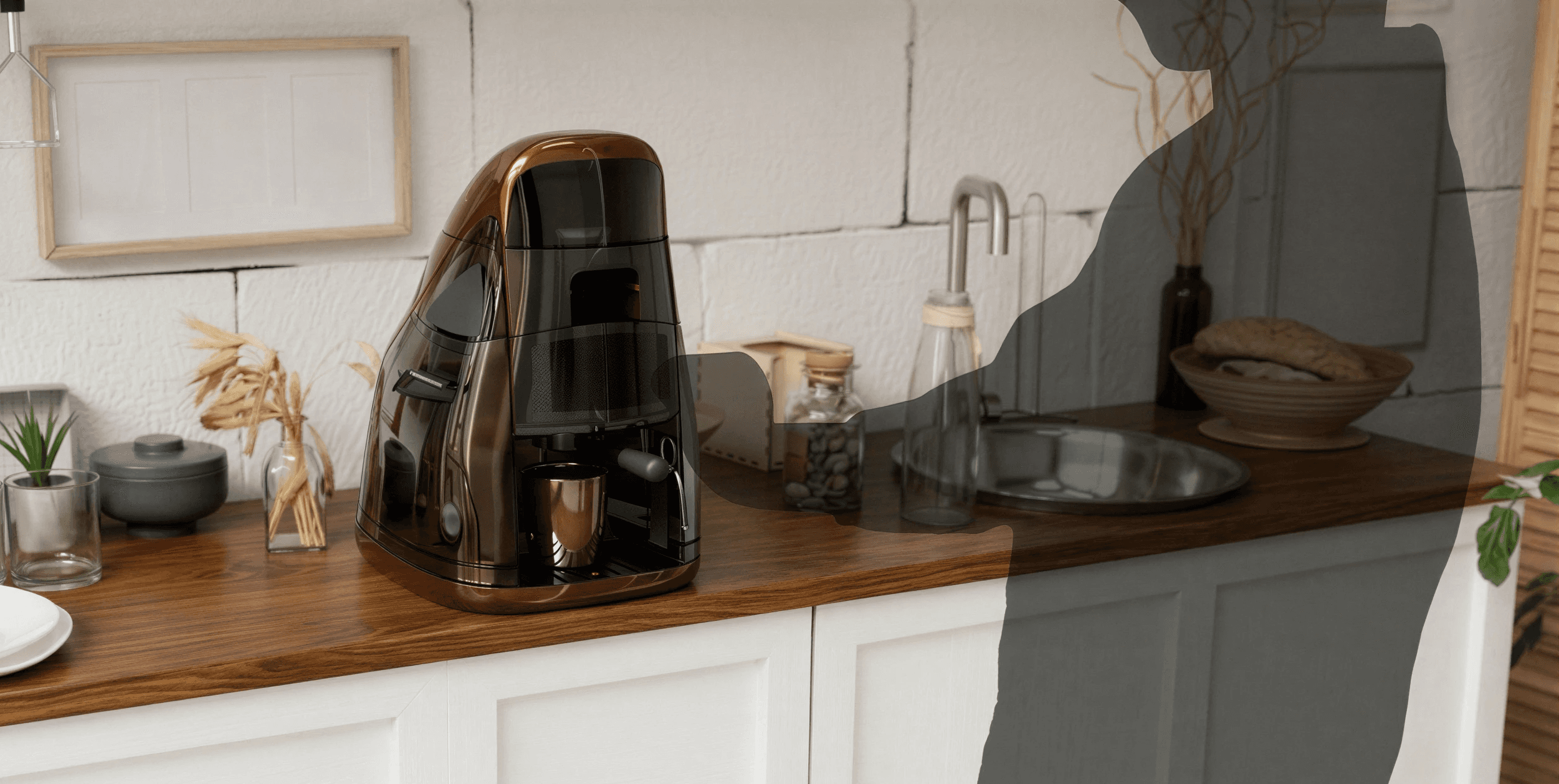
Most home espresso machines are engineered from the inside out; built around internal components rather than the user. That leads to familiar frustrations: awkward rear water tanks, unclear portafilter locking, unstable bases, and grinder modules that require servicing the entire machine. BioFlow Espresso reimagines the machine from the outside in, guided by Luigi Colani’s belief that form should follow nature. The result is a soft, continuous silhouette shaped around real user pain points rather than manufacturing convenience.
Most home espresso machines are engineered from the inside out; built around internal components rather than the user. That leads to familiar frustrations: awkward rear water tanks, unclear portafilter locking, unstable bases, and grinder modules that require servicing the entire machine. BioFlow Espresso reimagines the machine from the outside in, guided by Luigi Colani’s belief that form should follow nature. The result is a soft, continuous silhouette shaped around real user pain points rather than manufacturing convenience.
Title
Title
BioFlow Espresso
BioFlow Espresso
Industry
Industry
Consumer Appliances
Consumer Appliances
Date
Date
2026
2026
Most home espresso machines are designed around internal components, not the person using them. The water tank hides at the back with a finger-width handle. The portafilter locks with no clear indication of where it goes. The grinder is fused to the machine, so if it breaks, the whole unit goes in for repair. This project started from those friction points, observed through a camera study and user interviews with a Breville owner; and asked what the machine would look like if it were redesigned from the outside in, guided by Luigi Colani's principle that form should follow nature, not manufacturing convenience.
Most home espresso machines are designed around internal components, not the person using them. The water tank hides at the back with a finger-width handle. The portafilter locks with no clear indication of where it goes. The grinder is fused to the machine, so if it breaks, the whole unit goes in for repair. This project started from those friction points, observed through a camera study and user interviews with a Breville owner; and asked what the machine would look like if it were redesigned from the outside in, guided by Luigi Colani's principle that form should follow nature, not manufacturing convenience.

Challenge
Challenge
A camera study and user interviews revealed five core issues with the existing Breville machine: no clear affordance on the portafilter lock, a two‑handed grip needed to engage it, a rear‑mounted water tank with a narrow handle that’s hard to reach, a base too light to stay stable during locking, and an integrated grinder that forces full‑machine servicing if it fails. These pain points shaped the direction of the redesign.
A camera study and user interviews revealed five core issues with the existing Breville machine: no clear affordance on the portafilter lock, a two‑handed grip needed to engage it, a rear‑mounted water tank with a narrow handle that’s hard to reach, a base too light to stay stable during locking, and an integrated grinder that forces full‑machine servicing if it fails. These pain points shaped the direction of the redesign.
Approach
Approach
The design process began broad, exploring multiple directions before narrowing into specific problem areas: portafilter geometry, tank removal, grinder placement, and control layout. Early sketches tested different silhouettes and interaction flows, gradually refining how each component could be reorganized into a more intuitive, sculptural form before moving into mockups and CAD.
The design process began broad, exploring multiple directions before narrowing into specific problem areas: portafilter geometry, tank removal, grinder placement, and control layout. Early sketches tested different silhouettes and interaction flows, gradually refining how each component could be reorganized into a more intuitive, sculptural form before moving into mockups and CAD.


Testing and Development
Testing and Development
Development started with foam mockups to establish scale and counter presence next to the existing Breville unit. Three CAD iterations followed: the first defined a basic upright form; the second softened the geometry into more continuous curves; and the third dissolved the remaining edges into a fully organic silhouette. By this stage, the water canister, grinder, and shell read as one unified sculptural form rather than separate parts.
Development started with foam mockups to establish scale and counter presence next to the existing Breville unit. Three CAD iterations followed: the first defined a basic upright form; the second softened the geometry into more continuous curves; and the third dissolved the remaining edges into a fully organic silhouette. By this stage, the water canister, grinder, and shell read as one unified sculptural form rather than separate parts.

Every feature on the final machine traces back to a documented failure on the original. Side‑mounted water canisters replace the awkward rear slot with a full‑hand grip that lifts out cleanly. The bean grinder becomes a detachable module, refillable from the top and removable for cleaning or replacement. The portafilter handle is shaped for a natural palm grip with a locking direction that’s intuitive without labels. A swivel steam wand sits at natural hand height, and a simple front‑facing display keeps controls reachable with one hand. The smoked polycarbonate shell ties everything together into a continuous Colani‑inspired form.
Every feature on the final machine traces back to a documented failure on the original. Side‑mounted water canisters replace the awkward rear slot with a full‑hand grip that lifts out cleanly. The bean grinder becomes a detachable module, refillable from the top and removable for cleaning or replacement. The portafilter handle is shaped for a natural palm grip with a locking direction that’s intuitive without labels. A swivel steam wand sits at natural hand height, and a simple front‑facing display keeps controls reachable with one hand. The smoked polycarbonate shell ties everything together into a continuous Colani‑inspired form.

Every feature on the final machine traces back to a documented failure on the original. The two side-mounted water canisters replace the awkward rear slot with a full-hand grip that lifts out cleanly. The bean grinder detaches completely as its own module, refillable from the top, removable for cleaning or replacement without touching the rest of the machine. The portafilter handle is shaped for a natural palm grip with a locking geometry that communicates the correct direction without labels. A swivel-arm steam wand sits at natural hand height on the side, and a simple front-facing button display keeps all controls reachable with one hand. The smoked polycarbonate shell holds it all together, continuous, organic surfaces in the Colani tradition, where nothing looks bolted on because nothing is.
Every feature on the final machine traces back to a documented failure on the original. The two side-mounted water canisters replace the awkward rear slot with a full-hand grip that lifts out cleanly. The bean grinder detaches completely as its own module, refillable from the top, removable for cleaning or replacement without touching the rest of the machine. The portafilter handle is shaped for a natural palm grip with a locking geometry that communicates the correct direction without labels. A swivel-arm steam wand sits at natural hand height on the side, and a simple front-facing button display keeps all controls reachable with one hand. The smoked polycarbonate shell holds it all together, continuous, organic surfaces in the Colani tradition, where nothing looks bolted on because nothing is.

The design breaks the espresso setup into clear, purposeful parts, showing how each component contributes to a smooth brewing workflow. The main machine handles extraction, while the grinder, portafilter, and milk frother shape flavor and texture. Supporting pieces - the water canister, drip‑tray plate, and lids; keep the process clean and organized. Seeing the machine assembled beside its exploded layout highlights how the sculptural exterior hides a well‑considered internal system.
The design breaks the espresso setup into clear, purposeful parts, showing how each component contributes to a smooth brewing workflow. The main machine handles extraction, while the grinder, portafilter, and milk frother shape flavor and texture. Supporting pieces - the water canister, drip‑tray plate, and lids; keep the process clean and organized. Seeing the machine assembled beside its exploded layout highlights how the sculptural exterior hides a well‑considered internal system.
Projects
Explore more like this one




Explore the other projects in this collection — each detail page now surfaces work beyond the current case study.