Adaptive Bumper Cars
Adaptive Bumper Cars
A mobility‑supportive design enabling independent play for children with physical constraints.
A mobility‑supportive design enabling independent play for children with physical constraints.
Stock ride-on cars weren't built for every child. For kids with limited trunk control, the problems started before they even moved weak backrests with no real support, shoulder straps that kept sliding off, and a two-point harness that couldn't hold a child securely in place. The redesign changed that: a back extension that keeps the spine supported, and a five-point harness that stays put and holds the child properly in the seat. Small changes that make the difference between a car that moves and a car a child can actually be in.
Stock ride-on cars weren't built for every child. For kids with limited trunk control, the problems started before they even moved weak backrests with no real support, shoulder straps that kept sliding off, and a two-point harness that couldn't hold a child securely in place. The redesign changed that: a back extension that keeps the spine supported, and a five-point harness that stays put and holds the child properly in the seat. Small changes that make the difference between a car that moves and a car a child can actually be in.

Title
Title
Adaptive Bumper Cars
Adaptive Bumper Cars
Industry
Industry
Medical & Adaptive Equipment
Medical & Adaptive Equipment
Date
Date
2025
2025
Designed for children aged 2–8 with limited trunk control, low upper‑body strength, and restricted reach. The goal was to enable independent operation once seated, with caregivers only assisting during strapping in. This project focused on creating a supportive seating system that lets every child move, steer, and explore with confidence.
Designed for children aged 2–8 with limited trunk control, low upper‑body strength, and restricted reach. The goal was to enable independent operation once seated, with caregivers only assisting during strapping in. This project focused on creating a supportive seating system that lets every child move, steer, and explore with confidence.

Core issues of the current bumper cars
Core issues of the current bumper cars
The original bumper cars weren’t designed for children with mobility constraints. Shoulder straps slipped during turns, the backrest was too low to support the spine, and the seat lacked cushioning or adjustability. Controls were placed for an average child, making them unreachable for many users. Nothing about the car considered specific physical needs, and it showed.
The original bumper cars weren’t designed for children with mobility constraints. Shoulder straps slipped during turns, the backrest was too low to support the spine, and the seat lacked cushioning or adjustability. Controls were placed for an average child, making them unreachable for many users. Nothing about the car considered specific physical needs, and it showed.
Challenge for the kids
Challenge for the kids
The children using these cars ranged from toddlers with early developmental delays to older kids with low trunk stability and limited strength. Many could initiate movement but struggled to stay upright through turns or impacts. A product meant to build independence often did the opposite - every slip, slide, or missed control reminded them of what they couldn’t do. The challenge was to turn that experience into one of capability and confidence.
The children using these cars ranged from toddlers with early developmental delays to older kids with low trunk stability and limited strength. Many could initiate movement but struggled to stay upright through turns or impacts. A product meant to build independence often did the opposite - every slip, slide, or missed control reminded them of what they couldn’t do. The challenge was to turn that experience into one of capability and confidence.
Approach
Approach
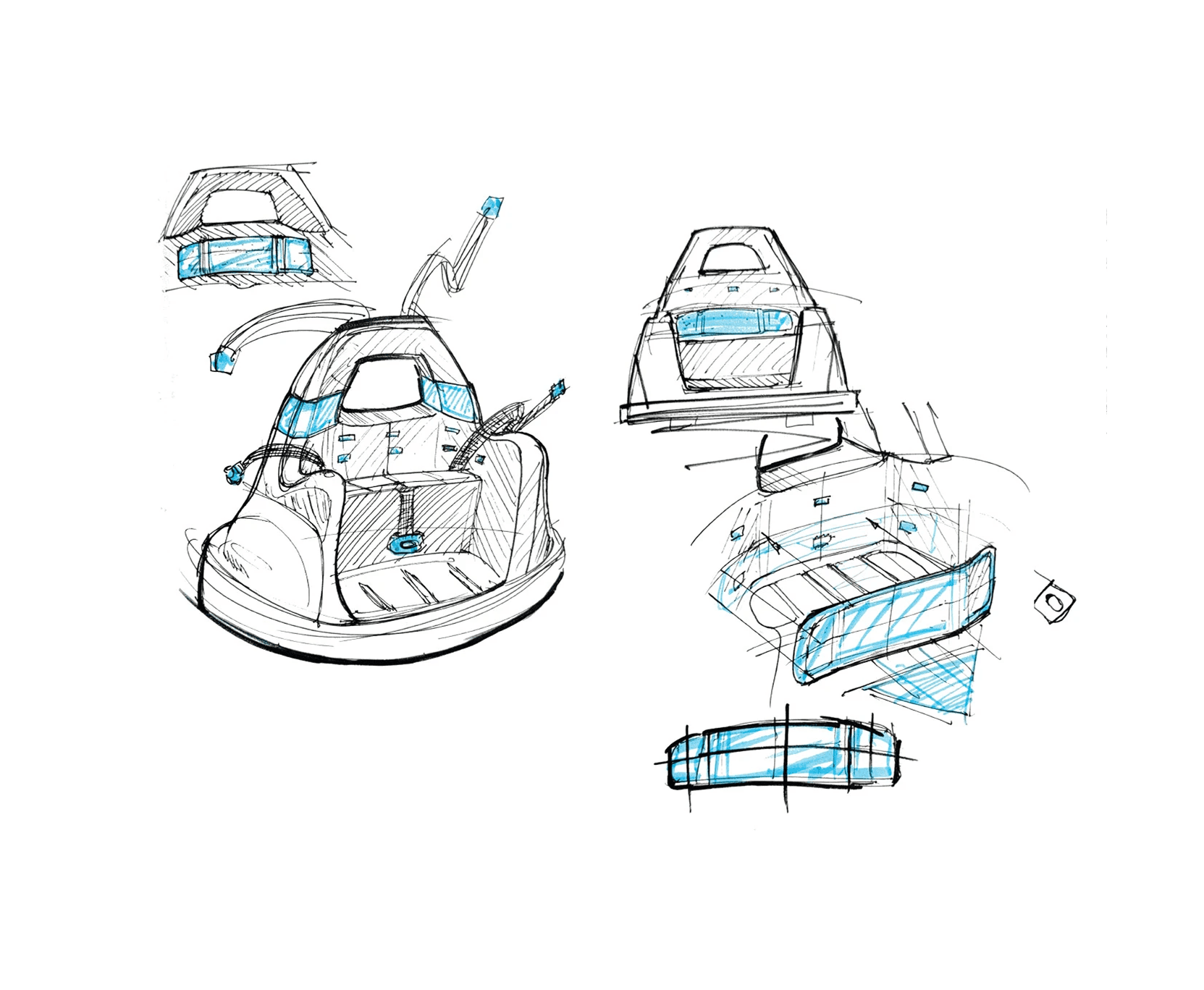
The goal was to create a seating system that supported every child. A middle strap prevented the 5‑point harness from slipping, softer padding improved comfort, and a modular backrest allowed height adjustments for different body sizes. Interchangeable seat‑pad thicknesses helped tailor support so each child could sit securely and comfortably.
The goal was to create a seating system that supported every child. A middle strap prevented the 5‑point harness from slipping, softer padding improved comfort, and a modular backrest allowed height adjustments for different body sizes. Interchangeable seat‑pad thicknesses helped tailor support so each child could sit securely and comfortably.


Testing and Development
Testing and Development
Prototypes were tested with children of different sizes to evaluate posture, reach, and comfort. A chest‑level buckle inspired by Trek backpacks improved harness stability. Multiple 3D‑printed backrest trials refined the fit and support. Foam tests with varying densities and thicknesses helped dial in the right balance of comfort and structure.
Prototypes were tested with children of different sizes to evaluate posture, reach, and comfort. A chest‑level buckle inspired by Trek backpacks improved harness stability. Multiple 3D‑printed backrest trials refined the fit and support. Foam tests with varying densities and thicknesses helped dial in the right balance of comfort and structure.

Throughout the project, prototypes and ideas were shared in regular reviews with the Easterseals team and faculty. Their feedback was direct and practical. One key insight: seat cushioning needed to adapt to each child, not an average size. This led to S, M, and L padding options so the fit could be tuned individually rather than forcing the child to fit the product.
Throughout the project, prototypes and ideas were shared in regular reviews with the Easterseals team and faculty. Their feedback was direct and practical. One key insight: seat cushioning needed to adapt to each child, not an average size. This led to S, M, and L padding options so the fit could be tuned individually rather than forcing the child to fit the product.

Interchangeable seat cushions added all‑around support with multiple thickness options for long‑duration comfort.
Backrest extension increased height and stability while keeping the original car’s look and remaining easy to swap or remove.
Upgraded 5‑point harness used a chest lock and improved padding to keep straps secure, prevent slipping, and maintain comfort during movement.
Interchangeable seat cushions added all‑around support with multiple thickness options for long‑duration comfort.
Backrest extension increased height and stability while keeping the original car’s look and remaining easy to swap or remove.
Upgraded 5‑point harness used a chest lock and improved padding to keep straps secure, prevent slipping, and maintain comfort during movement.

Interchangeable seat cushions added all‑around support with multiple thickness options for long‑duration comfort.
Backrest extension increased height and stability while keeping the original car’s look.
Upgraded 5‑point harness used a chest lock and improved padding to keep straps secure, prevent slipping, and maintain comfort during movement.
Interchangeable seat cushions added all‑around support with multiple thickness options for long‑duration comfort.
Backrest extension increased height and stability while keeping the original car’s look.
Upgraded 5‑point harness used a chest lock and improved padding to keep straps secure, prevent slipping, and maintain comfort during movement.

Projects
Explore more like this one




Explore the other projects in this collection — each detail page now surfaces work beyond the current case study.