Commute With Care
Commute With Care
Imagine an elderly person stepping into Mumbai’s crowded station, trying to stay steady while the world rushes around them. Every sign feels too small, every platform looks the same, and asking for help feels like losing a little dignity each time. This project redesigns that entire journey, creating a station that slows down for them, guides them gently, and gives them the confidence to travel on their own terms.
Imagine an elderly person stepping into Mumbai’s crowded station, trying to stay steady while the world rushes around them. Every sign feels too small, every platform looks the same, and asking for help feels like losing a little dignity each time. This project redesigns that entire journey, creating a station that slows down for them, guides them gently, and gives them the confidence to travel on their own terms.

Title
Title
Commute With Care
Commute With Care
Industry
Industry
System Design
System Design
Date
Date
2022
2022
Commute With Care reimagines the Mumbai local for elderly commuters who often feel rushed, unsafe, and overlooked in crowded stations. Through research and on‑ground observation, the project identifies the emotional and physical barriers they face and redesigns the journey with clearer wayfinding, calmer platforms, accessible routes, and supportive services. The result is a station experience that helps seniors travel with confidence, comfort, and independence.

Challenge
Challenge
Mumbai’s railway stations are not built for the pace or needs of older commuters. Physical decline, crowded platforms, and poor wayfinding combine to create unsafe, overwhelming travel experiences. The challenge is to redesign these spaces so seniors can move with dignity, clarity, and ease.
Mumbai’s railway stations are not built for the pace or needs of older commuters. Physical decline, crowded platforms, and poor wayfinding combine to create unsafe, overwhelming travel experiences. The challenge is to redesign these spaces so seniors can move with dignity, clarity, and ease.
Approach
Approach
My approach begins with understanding how older commuters actually feel inside Mumbai’s fast, crowded railway stations; spaces that move quicker than their bodies can and offer little clarity or support. Through empathy interviews and on‑ground observation, I focus on the emotional and physical barriers that make a simple journey overwhelming. From there, I design clearer paths, calmer zones, and senior‑friendly spaces that restore what the system has taken: safety, confidence, and the independence to travel with dignity.
My approach begins with understanding how older commuters actually feel inside Mumbai’s fast, crowded railway stations; spaces that move quicker than their bodies can and offer little clarity or support. Through empathy interviews and on‑ground observation, I focus on the emotional and physical barriers that make a simple journey overwhelming. From there, I design clearer paths, calmer zones, and senior‑friendly spaces that restore what the system has taken: safety, confidence, and the independence to travel with dignity.


Testing and Development
Testing and Development
The testing and development phase focused on validating how elderly passengers interacted with the redesigned station elements. Low‑fidelity prototypes were used to observe comfort, clarity, and ease of movement across ramps, stairs, and platforms. Feedback highlighted the importance of calm visual zones, clear color‑coding, and simple wayfinding, which guided refinements to signage, platform layout, and accessibility features. These quick tests ensured the final design supported effortless, safe, and independent travel for elderly users.
The testing and development phase focused on validating how elderly passengers interacted with the redesigned station elements. Low‑fidelity prototypes were used to observe comfort, clarity, and ease of movement across ramps, stairs, and platforms. Feedback highlighted the importance of calm visual zones, clear color‑coding, and simple wayfinding, which guided refinements to signage, platform layout, and accessibility features. These quick tests ensured the final design supported effortless, safe, and independent travel for elderly users.

The redesign introduces dedicated ticket counters for seniors, pregnant women, and disabled passengers at both entry and exit points, a calm white platform and overbridge zone that creates a clear, spacious, and easily identifiable accessible area, and a full system of color‑coded signage and directional arrows that guide travelers through entries, platforms, and transfers with minimal confusion. Together, these features improve accessibility, wayfinding, and overall ease of movement throughout the station.
The redesign introduces dedicated ticket counters for seniors, pregnant women, and disabled passengers at both entry and exit points, a calm white platform and overbridge zone that creates a clear, spacious, and easily identifiable accessible area, and a full system of color‑coded signage and directional arrows that guide travelers through entries, platforms, and transfers with minimal confusion. Together, these features improve accessibility, wayfinding, and overall ease of movement throughout the station.

The station includes an on‑bridge health center offering quick first‑aid support for elderly and vulnerable passengers, a flashing safety LED strip along the platform edge to prevent accidental falls, and clear LED information displays on the trains themselves showing next stops, train type, and destination. The overbridge also features comfortable seating with integrated planters to brighten the environment and give travelers a place to rest while waiting or transferring. Together, these features create a safer, clearer, and more supportive travel experience for all users.
The station includes an on‑bridge health center offering quick first‑aid support for elderly and vulnerable passengers, a flashing safety LED strip along the platform edge to prevent accidental falls, and clear LED information displays on the trains themselves showing next stops, train type, and destination. The overbridge also features comfortable seating with integrated planters to brighten the environment and give travelers a place to rest while waiting or transferring. Together, these features create a safer, clearer, and more supportive travel experience for all users.
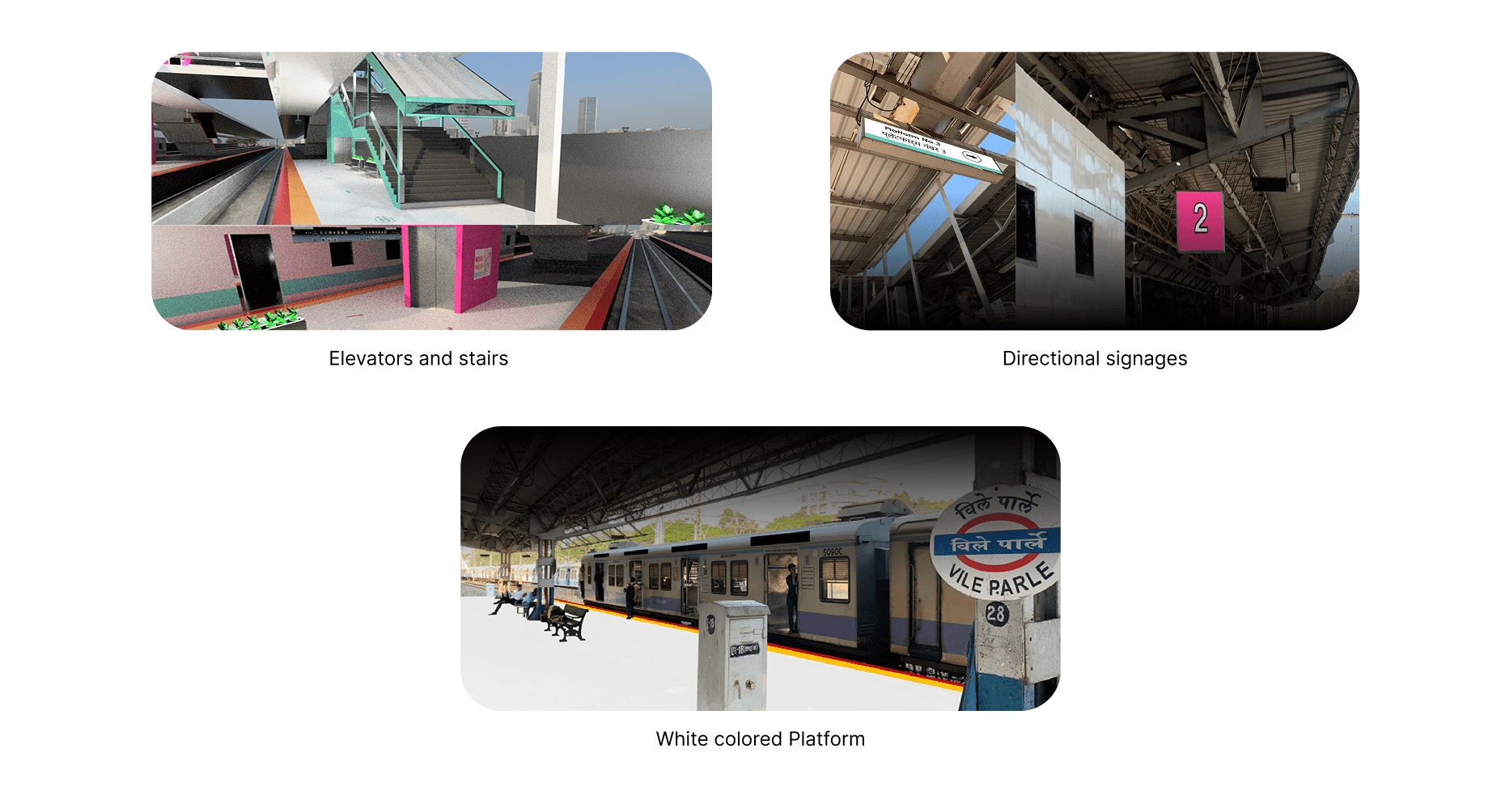
The station design adds two elevators per platform to split foot traffic and reduce congestion around entry points, supported by wide staircases that improve overall flow between levels. Clear direction signage across platforms, overbridges, and entry zones helps passengers navigate quickly, while integrated LED strips and information panels keep travelers aware of platform numbers, train status, and movement paths. These features work together to create a station environment that is easier to move through, safer, and more intuitive for daily commuters.
The station design adds two elevators per platform to split foot traffic and reduce congestion around entry points, supported by wide staircases that improve overall flow between levels. Clear direction signage across platforms, overbridges, and entry zones helps passengers navigate quickly, while integrated LED strips and information panels keep travelers aware of platform numbers, train status, and movement paths. These features work together to create a station environment that is easier to move through, safer, and more intuitive for daily commuters.

The redesigned ticket system uses clear color‑coding, bilingual text, and simple directional symbols to help elderly passengers navigate the Mumbai local network with confidence. Each ticket shows the train line, platform number, and step‑by‑step wayfinding from the station entry, supported by a new set of minimal route maps placed across platforms and overbridges. Together, the tickets and maps create an intuitive visual language that makes routes easier to understand, reduces confusion, and supports independent travel for all users.
The redesigned ticket system uses clear color‑coding, bilingual text, and simple directional symbols to help elderly passengers navigate the Mumbai local network with confidence. Each ticket shows the train line, platform number, and step‑by‑step wayfinding from the station entry, supported by a new set of minimal route maps placed across platforms and overbridges. Together, the tickets and maps create an intuitive visual language that makes routes easier to understand, reduces confusion, and supports independent travel for all users.
Projects
Explore more like this one


Explore the other projects in this collection — each detail page now surfaces work beyond the current case study.